
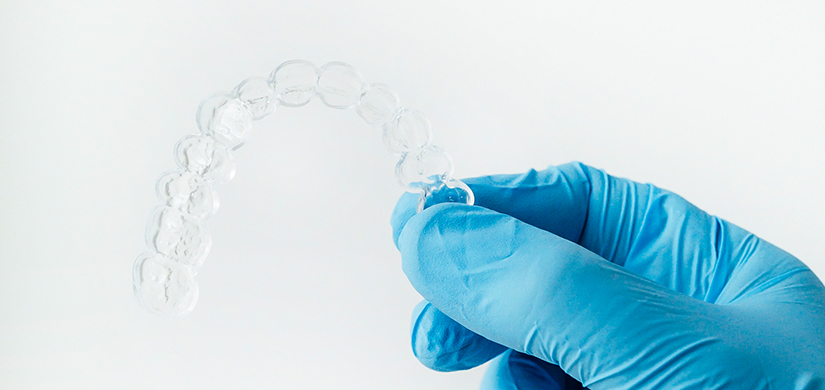
Invisalign® Clear Aligners in Fredericksburg, VA
Certified Invisalign® provider in Fredericksburg, VA. Straighten teeth without metal braces. Free consultation. Call Gateway Smiles at (540) 299-5721.
Invisalign® is a modern orthodontic system that straightens teeth using a series of clear, removable plastic aligners — no metal brackets, no wires, no significant lifestyle changes. Dr. Zaiber is a certified Invisalign provider with extensive experience designing treatment plans for adults and teens. Most cases finish in 6–18 months, with a final smile that is straighter, healthier, and more confident.
How Invisalign Works
Invisalign treatment uses a series of custom-made clear plastic aligners, each one slightly different from the last, to gradually move your teeth into their final position. You wear each aligner for 1–2 weeks before switching to the next in the series. Over the course of treatment, your teeth move through dozens of small, planned movements toward the result Dr. Zaiber has designed.
The aligners are virtually invisible — most people will not notice you are wearing them. They are removable, so you take them out to eat, drink (anything other than water), brush, and floss. This means no food restrictions and no special cleaning equipment — you simply continue your normal oral hygiene routine throughout treatment.
Treatment is monitored by Dr. Zaiber at check-up appointments every 6–8 weeks. We make any needed refinements to keep your treatment on track, and we use the same advanced 3D treatment planning software that the Invisalign system itself uses, so your treatment plan is precise from day one.
What Invisalign Can Treat
- Crowded teeth that overlap or are pushed out of alignment
- Spacing issues with gaps between teeth
- Crossbite where some upper teeth bite inside the lower teeth
- Overbite where upper front teeth significantly cover the lower
- Underbite where lower teeth extend in front of upper teeth
- Open bite where front teeth do not touch when back teeth are closed
- Mild to moderate relapse after previous orthodontic treatment
Invisalign vs. Traditional Braces
Both Invisalign and traditional braces can straighten teeth effectively. The right choice depends on your specific case, your lifestyle, and your preferences. Here is an honest comparison.
Invisalign is clear and removable. Most people will not notice them, you can eat anything you want, and oral hygiene is the same as before treatment. Traditional braces are visible (though ceramic and lingual options exist), require avoiding certain foods, and make brushing and flossing more challenging.
Invisalign is typically more comfortable. The smooth plastic aligners do not cause the irritation that metal brackets and wires can. There is some pressure when you start each new aligner, but no poking wires or broken brackets.
Traditional braces can sometimes handle complex orthodontic cases that Invisalign cannot. Severe crowding, significant bite issues, and certain rotational problems may be better treated with braces, especially in growing children. We will be honest with you about which approach is right for your case.
Invisalign treatment time is comparable to braces for most cases — typically 6–18 months. Both approaches require diligent compliance: Invisalign requires wearing your aligners 22 hours per day, and braces require careful oral hygiene and avoiding foods that can break them.
The Invisalign Process
- 1
Free Invisalign consultation
We start with a consultation to evaluate your case, take digital scans or impressions of your teeth, and discuss your goals. We will tell you honestly whether Invisalign is right for your situation, and if it is, we move to the planning phase.
- 2
3D treatment planning
Using your digital scan, Dr. Zaiber designs your complete treatment plan in 3D software. You will see a visual preview of how your teeth will move and what your final smile will look like before treatment begins. Refinements are made until you are confident in the plan.
- 3
Aligner fabrication
The complete series of custom aligners is fabricated based on the approved plan. The number of aligners depends on the complexity of your case — typically 20–60 aligners over the course of treatment.
- 4
Treatment begins
You receive your first set of aligners and begin wearing them. You will switch to a new aligner every 1–2 weeks at home. Check-up appointments every 6–8 weeks let us verify your progress and provide the next set of aligners.
- 5
Retainers
Once active treatment is complete, you transition to retainers to keep your new smile in position. Most patients wear retainers full-time for the first several months, then nights only indefinitely. Without retainers, teeth will drift back over time.
How Long Does Treatment Take?
Most Invisalign cases take 6–18 months from start to finish. Simple cases (minor spacing or crowding) often complete in 6–9 months. Moderate cases finish in 9–15 months. Complex cases may take 18 months or more. Compliance affects timing significantly — patients who wear their aligners the recommended 22 hours per day move on the planned schedule, while patients who skip days extend their treatment. We design every case around realistic expectations and walk you through the timeline at your consultation.
Living with Invisalign
The biggest adjustment is the discipline of wearing your aligners 22 hours per day. They come out only for meals, drinks other than water, and oral hygiene. Patients who commit to consistent wear see the best results on the planned timeline.
Eating is easy — you take the aligners out for meals and put them back in after brushing. No food restrictions, no broken brackets, no embarrassing photos of broccoli stuck in your braces. Some patients find it helpful to keep a small case in their bag or pocket so they always have a place to put the aligners during meals.
Speech adapts within a day or two. Some patients notice a slight lisp during the first few aligners, which the tongue quickly accommodates.
Discomfort is minimal. Each new aligner produces some pressure for the first day or two as your teeth begin moving to the next position. This resolves quickly and is typically described as 'noticeable but not painful.'
Invisalign for Teens
Invisalign Teen is a version specifically designed for adolescent patients. It includes features to track wear time (small blue indicators that fade with use) and accommodates the eruption of any teeth still coming in. For most teens with appropriate cases, Invisalign offers significant advantages over traditional braces: better oral hygiene during treatment, fewer dietary restrictions, no orthodontic emergencies from broken brackets, and dramatically improved aesthetics during the teenage years. We discuss whether Invisalign is the right choice for any given teen at consultation.
Cost and Insurance
Invisalign treatment typically costs $4,000–$7,500, depending on the complexity of your case. Many dental insurance plans include orthodontic benefits that cover a portion of treatment — typically a lifetime maximum of $1,500–$2,500. We will verify your specific orthodontic benefits before treatment begins. We also offer financing through CareCredit and other options, with payment plans as low as $150 per month. HSA and FSA funds can typically be used for Invisalign treatment.
Frequently asked questions
Have more questions about invisalign? Call us at (540) 299-5721 — we're happy to help.
For the great majority of cases, yes. Invisalign technology has advanced significantly over the past two decades and now handles cases that previously required braces. Some complex cases may still be better treated with traditional braces, and we will tell you honestly if that applies to your situation.
Most patients describe Invisalign as comfortable. There is some pressure for the first day or two of each new aligner as the teeth begin moving, but no sharp pain. Aligners do not poke or irritate the cheeks and gums the way braces sometimes do.
Most patients wear retainers full-time for the first 3–6 months after active treatment, then transition to nighttime wear indefinitely. Without retainers, your teeth will gradually shift back toward their original position over months and years. This is true after any orthodontic treatment, not just Invisalign.
You take the aligners out to eat and drink (anything other than plain water). This is one of Invisalign's main advantages over braces — no food restrictions at all. Just remember to brush before putting the aligners back in.
Significantly. Mail-order aligner services like SmileDirectClub use remote, often unsupervised treatment that has produced widely documented problems — incorrect diagnoses, inappropriate cases treated, and complications that go unaddressed. Dr. Zaiber is a certified Invisalign provider who examines you in person, takes 3D scans, supervises every step of your treatment, and can adjust your plan if needed. The cost is comparable, and the difference in safety and quality is significant.
Many Invisalign cases use small tooth-colored 'attachments' bonded to specific teeth to help the aligners grip and move them effectively. These are barely visible and are removed at the end of treatment. Many cases also include a 'refinement' phase at the end — a short series of additional aligners to fine-tune the final result. Both are part of the standard treatment.
Related procedures
Let's talk about your invisalign
Come in for a consultation with Dr. Zaiber. We'll examine your situation, explain your options, and recommend the right approach — with no pressure to commit.