
Dental Implants in Fredericksburg, VA
Dental implants in Fredericksburg, VA. Permanent, natural-looking tooth replacement at Gateway Smiles. Free consultation. Call (540) 299-5721.
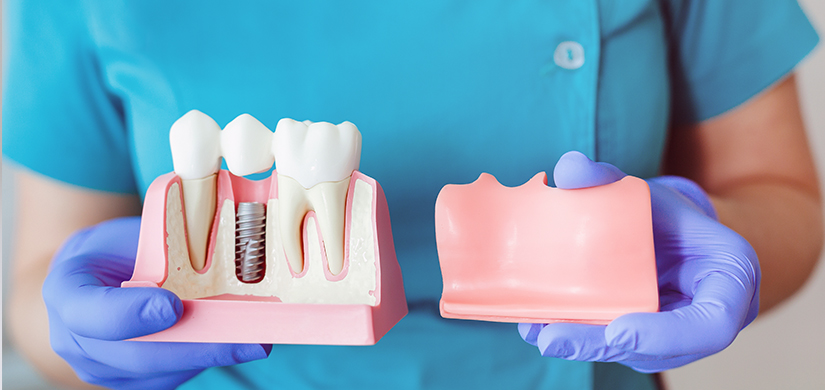
A dental implant is a small titanium post that replaces the root of a missing tooth, surgically placed into the jawbone where it integrates with the surrounding bone over several months. Once integrated, the implant supports a custom-made crown that looks, feels, and functions like a natural tooth. Implants are the most predictable, longest-lasting solution for tooth replacement available — and for most patients, they are the right choice.
Why Dental Implants Are the Gold Standard
When you lose a tooth, you have three main replacement options: a removable partial denture, a fixed dental bridge, or a dental implant. Each can restore the appearance of your smile, but they differ significantly in long-term outcomes.
Dental implants are unique because they replace the root of the tooth as well as the visible crown. The titanium implant fuses with your jawbone through a process called osseointegration, becoming a true anchor that functions like a natural tooth root. This has profound consequences for long-term oral health.
Implants preserve the bone in your jaw. When a tooth is missing, the bone underneath it gradually shrinks because it is no longer being stimulated by chewing forces. Bridges and dentures do not stimulate this bone, so it continues to shrink. Implants stimulate the bone just like a natural tooth root, preserving facial structure and preventing the 'collapsed' look that develops with long-term tooth loss.
Implants do not damage adjacent teeth. A traditional bridge requires grinding down the healthy teeth on either side of the gap to support the bridge — an irreversible procedure that can compromise those teeth over time. Implants are freestanding and require no preparation of neighboring teeth.
Implants last decades, often a lifetime. Bridges typically need replacement every 10–15 years. Implants, when properly placed and cared for, frequently last 25 years or longer. The crown on top of the implant may eventually need replacement, but the implant itself is essentially permanent.
Are You a Candidate?
Most adults in good general health are candidates for dental implants. The main factors we evaluate are bone quantity and quality (does your jaw have enough bone to support an implant?), gum health (are your gums healthy enough for the implant to heal properly?), general medical health (are there conditions that affect healing?), and lifestyle factors (do you smoke, which significantly affects success rates?).
If you are missing bone, we can often build it up with a bone graft before or during implant placement. If you have gum disease, we treat that first. If you have medical conditions like uncontrolled diabetes, we coordinate with your physician to optimize your health for surgery. Smokers are encouraged to quit at least temporarily during the healing period — implant success rates are dramatically higher in non-smokers.
A consultation that includes 3D imaging gives us the information we need to assess your case definitively. Many patients who have been told they 'cannot have implants' elsewhere are actually candidates with the right planning and possibly grafting.
The Implant Process
- 1
Comprehensive consultation
We begin with a thorough examination, including 3D imaging when needed, to evaluate your bone, gums, and overall oral health. We discuss your goals, the treatment options available, the timeline, and the cost. You will leave with a complete written treatment plan.
- 2
Any preparatory treatment
If extractions, gum disease treatment, or bone grafting are needed before implant placement, those steps are completed first. Healing time depends on the procedure — typically 3–6 months for major bone grafts, less for smaller preparations.
- 3
Implant placement surgery
The implant is placed surgically under local anesthesia, with sedation available. The procedure typically takes 30–90 minutes per implant. You will feel pressure but no pain. Most patients describe the recovery as easier than a routine extraction — a few days of mild discomfort and swelling, then back to normal.
- 4
Osseointegration (healing)
Over 3–6 months, the implant fuses with the surrounding bone. During this time, you wear a temporary tooth replacement when needed. There is typically no pain or significant restriction during this period.
- 5
Abutment and crown
Once osseointegration is complete, a small connector (the abutment) is attached to the implant, and your custom crown is fabricated by a dental laboratory and cemented onto the abutment. The result is a permanent, natural-looking tooth.
Single Implants vs. Multiple Implants
When replacing a single missing tooth, one implant supports one crown — the most common implant scenario. This approach preserves all neighboring teeth and is the gold standard.
When replacing multiple adjacent missing teeth, you have options. Each missing tooth could be replaced with its own implant — the most expensive option but with the best individual function. Alternatively, two implants can support a three-unit implant bridge, replacing three missing teeth with two implants. Multiple missing teeth can also be replaced with implant-supported partial dentures (snap-on dentures) that are dramatically more stable than conventional partials.
When all teeth in an arch are missing, full arch implant solutions like All-on-4® use as few as four implants to support a full set of replacement teeth. This is one of the most life-changing procedures in modern dentistry — see our Full Arch Replacement page for more information.
Implant Care and Maintenance
Dental implants are cared for the same way as natural teeth, with normal brushing twice daily, daily flossing (special floss or floss threaders work best around implants), and regular professional cleanings every six months. The implant itself cannot get a cavity, but the gums around the implant can develop inflammation similar to gum disease around natural teeth — a condition called peri-implantitis.
Peri-implantitis is the leading cause of long-term implant failure, and it is largely preventable with good oral hygiene and routine professional cleanings. Patients who maintain their implants well typically enjoy them for decades without issues.
Avoid habits that put implants at risk: do not chew on hard objects (ice, hard candy, pen caps), do not use your teeth as tools, and address any grinding habits with a custom nightguard.
Implant Success Rates
Modern dental implants have success rates of 95–98% over 10 years. Failure when it occurs is typically due to infection, smoking, uncontrolled diabetes, poor oral hygiene, or excessive force from grinding. With proper case selection, careful placement, and good ongoing care, the vast majority of implants serve patients well for decades.
Cost and Insurance
A complete single implant — including the implant fixture, abutment, and crown — typically costs $3,500–$6,000. Cases that require bone grafting or other preparatory work cost more. Insurance coverage for implants varies widely: some plans cover a portion (typically 25–50% of the crown component), some cover none of it, and a few cover more. Most patients use a combination of insurance, HSA/FSA funds, and CareCredit financing to make implants affordable. We provide a detailed written estimate at consultation, including a clear breakdown of insurance coverage and out-of-pocket costs.
Who Performs the Implant Procedure?
Dr. Zaiber places implants for many straightforward cases. For complex cases — significant bone grafting, sinus lifts, full arch reconstructions, or implants in the aesthetic zone with challenging conditions — we coordinate with trusted oral surgeons and periodontists in the Fredericksburg area. We complete the restorative phase (the abutment and crown) in our office regardless of who places the implant. We will be transparent about which provider will be handling each step at your consultation.
Frequently asked questions
Have more questions about implants? Call us at (540) 299-5721 — we're happy to help.
Most patients are surprised by how comfortable the procedure is. Implant placement is performed under local anesthesia with optional sedation. Recovery is typically easier than patients expect — most describe it as similar to a routine extraction, with a few days of mild discomfort that responds well to over-the-counter pain relievers.
Most cases take 4–9 months from start to finish. The implant is placed surgically, then needs 3–6 months to integrate with the bone before the final crown is placed. Cases requiring bone grafting or extractions before implant placement may take longer. Some cases qualify for immediate-load implants with a temporary crown placed the same day as the implant.
Yes. A well-made implant crown is essentially indistinguishable from a natural tooth. The crown is custom-matched to the color, shape, and translucency of your existing teeth. Even up close, even on a front tooth, the result looks completely natural.
Most dental insurance plans provide some coverage for implants, but rarely 100%. Typical coverage ranges from 25% to 50% of the crown portion, with annual maximums applying. We verify your specific benefits and provide a clear written estimate of any out-of-pocket cost. Many patients use HSA/FSA funds and financing to manage the remainder.
With proper care, dental implants frequently last 25 years or longer — often a lifetime. Modern implants have success rates of 95–98% over 10 years. The crown on top of the implant may eventually need replacement (typically after 15–20 years), but the implant itself is permanent.
Often yes, though sometimes a bone graft is needed first. When a tooth is missing for a long period, the bone in that area gradually shrinks. If there is not enough bone for an implant, we can build it up with grafting before placing the implant. Many patients who lost teeth years ago are still candidates for implants today.

Let's talk about your implants
Come in for a consultation with Dr. Zaiber. We'll examine your situation, explain your options, and recommend the right approach — with no pressure to commit.