Dentures & Partials in Fredericksburg, VA
Custom-fitted dentures and partial dentures at Gateway Smiles in Fredericksburg, VA. Natural-looking, comfortable tooth replacement. Call (540) 299-5721.
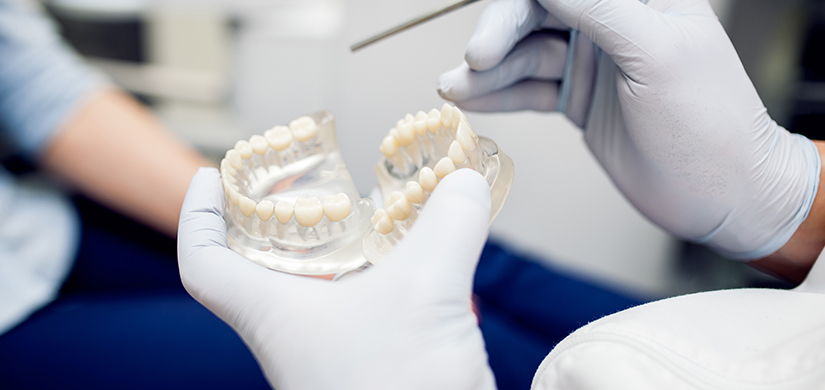
Dentures replace some or all of your teeth with custom-made prosthetics that restore the appearance of your smile, return your ability to chew, and support the natural shape of your face. Modern dentures are far more comfortable, natural-looking, and stable than dentures of past generations — especially when combined with dental implants for additional retention.
Types of Dentures We Offer
Dentures are not one-size-fits-all. The right type depends on how many teeth are missing, the condition of your gums and remaining teeth, and your goals for comfort, appearance, and budget. We offer several options at Gateway Smiles.
- Complete (full) dentures — replace all teeth in the upper jaw, lower jaw, or both. Custom-fitted to your gums and palate to restore your smile and chewing function.
- Partial dentures — replace some missing teeth while clipping onto your remaining natural teeth for support. A good option when you have healthy teeth that can serve as anchors.
- Immediate dentures — placed the same day that remaining teeth are extracted, so you are never without teeth. Adjusted as the gums heal.
- Implant-supported dentures — anchored to 2–4 dental implants for dramatically improved stability and comfort. Highly recommended when feasible.
- All-on-4® full arch — a fixed (non-removable) dental bridge supported by four implants, replacing an entire arch of teeth. The most advanced option for patients with extensive tooth loss.
Conventional vs. Implant-Supported Dentures
The biggest advance in denture technology over the past two decades is the use of dental implants to stabilize them. Conventional dentures rely entirely on the shape of your gums and the muscles of your cheeks and tongue to stay in place. They can shift, click, or slip, especially the lower denture, which has less surface area to grip.
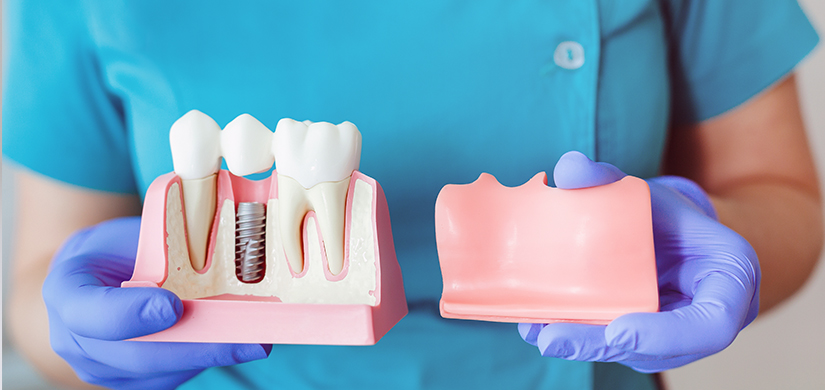
Implant-supported dentures snap securely onto a small number of dental implants — typically 2–4 per arch. The improvement in comfort, stability, and confidence is dramatic. Patients can eat foods that would be impossible with conventional dentures, speak without worry, and forget about their dentures for hours at a time.
Implant-supported options range from removable 'snap-on' dentures (you take them out at night) to fully fixed bridges that are not removable at all (the All-on-4® approach). The right choice depends on your bone, your goals, and your budget, and we will walk you through every option at your consultation.
The Denture Process
- 1
Consultation and planning
We start with a comprehensive examination, X-rays, and a discussion of your goals. Together we choose the type of denture that fits your needs and budget, and we plan the treatment timeline.
- 2
Any necessary extractions or implant placement
If any failing teeth need to be removed, we plan that carefully. If implants are part of your plan, we coordinate their placement and integration period.
- 3
Impressions and trial fitting
We take precise impressions and bite records, and we use trial dentures (wax try-ins) to confirm the appearance, fit, and bite before the final dentures are made.
- 4
Delivery and adjustment
When your dentures are ready, we fit them carefully and make adjustments to ensure comfort. We see you back over the following weeks for any additional adjustments as your mouth gets accustomed to the new prosthetic.
Living with Dentures
There is an adjustment period when you first receive dentures, especially complete dentures. For the first few weeks, you may notice changes in how foods taste and feel, slight differences in your speech, and increased saliva production. These all resolve within a few weeks as your mouth and brain adapt.
Eating is the hardest skill to relearn. We recommend starting with soft foods cut into small pieces, chewing slowly, and using both sides of your mouth simultaneously. After a few weeks of practice, most patients can eat a wide variety of foods, though some very hard or sticky items (whole apples, corn on the cob, chewy caramels) remain challenging with conventional dentures.
Speaking takes practice as well. Reading aloud in private for a few minutes a day for the first week or two accelerates the adaptation. By the end of the first month, most patients speak normally.
Caring for Your Dentures
- Remove and rinse your dentures after eating to clear food debris
- Brush your dentures daily with a soft brush and denture cleaner (not regular toothpaste, which can be too abrasive)
- Soak dentures overnight in water or a denture-soaking solution — never let them dry out
- Brush your gums, tongue, and palate every morning with a soft brush before reinserting your dentures
- Bring your dentures to every dental visit so we can inspect and clean them professionally
- Never try to adjust or repair dentures at home — improper fixes can ruin the fit
How Long Do Dentures Last?
Conventional dentures typically last 5–10 years before needing to be replaced or relined. Your gums change shape over time after tooth loss, so even a perfectly fitted denture eventually needs adjustment. Implant-supported dentures last longer — the implants themselves are permanent, and only the prosthetic component needs occasional replacement. Routine dental visits allow us to check the fit, make small adjustments, and identify when replacement or relining is needed.
Cost and Insurance
Insurance coverage for dentures varies widely. Many plans cover dentures at 50% after the deductible, with annual maximum limits applying. Without insurance, conventional complete dentures typically cost $1,500–$3,000 per arch in our area; implant-supported solutions range from $4,000 for a basic snap-on denture (in addition to implant costs) up to $20,000–$30,000 per arch for All-on-4. We provide clear written estimates and offer financing through CareCredit and other options.
Frequently asked questions
Have more questions about dentures? Call us at (540) 299-5721 — we're happy to help.
Most patients adapt to dentures within 2–4 weeks. The first week is the most challenging — your mouth needs time to learn to keep the denture in place, and eating and speaking take practice. By the end of the first month, most patients are comfortable and capable.
We recommend removing your dentures at night. Your gum tissues need time to rest and recover, and removing the dentures reduces the risk of fungal infections (denture stomatitis). Soak them in water or a denture cleaner overnight.
Modern dentures can look remarkably natural — the tooth color, shape, arrangement, and gum coloration can all be customized. We work with high-quality dental laboratories to produce dentures that look like your own teeth, not like 'dentures.'
A partial denture is removable — you take it out at night for cleaning. It clips onto your remaining natural teeth for retention. A bridge is permanently cemented in place and uses crowns on adjacent teeth for support. Bridges feel more like natural teeth; partials are typically less expensive and easier to modify if your remaining teeth change.
Stability is the main advantage. Conventional dentures, especially lower dentures, can shift, click, or fall out during eating or speaking. Implant-supported dentures snap securely onto implants and do not move. The improvement in comfort, confidence, and quality of life is dramatic.
Yes — these are called immediate dentures. We make the dentures in advance based on impressions of your current mouth, then deliver them on the same day that your remaining teeth are extracted. You are never without teeth. The denture is adjusted as your gums heal over the following weeks.

Let's talk about your dentures
Come in for a consultation with Dr. Zaiber. We'll examine your situation, explain your options, and recommend the right approach — with no pressure to commit.